Blog

Displaying 1 to 5 of 27 blog entries

« Previous | 1 | 2 | 3 | 4 | 5 | 6 | Next »
22/12/09 - Pittards into Africa - at long last.


Tomorrow Pittards will complete their purchase of Ethiopian Tannery. I attended the EGM this morning which approved the share issue which had been previously placed at 1.5p per share with the directors and senior management. This raised the just over £2m needed for the down payment and some working capital. The whole deal signals that Pittards are out of "intensive care" and there is no real reason for them to slip back into losses in the foreseeable future. They are located in the best place in the world for their major raw material, which is one of the few not subject to huge swings in price, and able to make most of their production in the currency in which they buy and sell.

It seems curious that I can remember 20 years ago sitting in a lakeside hotel outside of Addis Ababa with a very great friend when we heard President Mengistu announce on the TV that he was stepping down, and it was actually May 1991 when he left the country to go into exile. That was the moment when we had all felt it was logical to enter Ethiopia and purchase on of the plants which it made no sense for the government to hold on to.  Guarantee raw material supplies, make in a dollar environment, avoid the high costs of sterling, do something to help loyal suppliers in Africa and make a point that African countries can add value and not just export commodities.  So we are twenty years on and there is no doubt that not making the move was part of the problem that lead to Pittards nearly going under after the best part of 200 years in existence. Yes, there were other issues, but growing smaller in a Sterling dominated manufacturing centre was never a strategy that made sense for any sort of company, least of all the one with the best recognised and respected business to business brand name in the leather industry. One with great and loyal customers hoping they would make the move to support them with better supply security and more stable prices.
But the clock cannot be turned back and here we are just ending 2009 and Pittards have done it at last, are still alive, and have every prospect for growth. Instead of Out of Africa it is Into Africa and with perfect timing as never before has the leather industry in Ethiopia looked more like growing into a viable and sustainable industry with footwear, clothing and leathergoods production. With a growing economy local demand will also grow. Kenya and Tanzania are looking at what Ethiopia are doing and are likely to follow. The Middle East is logistically close to Ethiopia and good new market to consider. No longer does everything made of leather have to go to the USA or the EU. This is a moment of change. Perhaps even the African nations will start to be willing to trade to each other and build new lines of communications. The Europeans built routes to the sea to export first slaves and then raw materials, It is a new infrastructure that is needed. If Ethiopia can use its growing wealth to build that infrastructure and at the same time develop a light industrial base out of leather with the large employment opportunities that come with making things out of leather then they will be building a real foundation for future prosperity.

And do not forget about Nigeria. All we hear about is violence, oil, corruption and Sharia law. But Nigeria has a strong leather raw material base and some good plants; it is perfect for capacity building and getting to leather footwear and clothing. And who is the British Ambassador? Bob Dewar, lately of Ethiopia and fully understanding of the potential good leather can do for a country.

Perhaps one day he can persuade the British DFID to understand and support the concept. It is all about Trade not Aid. A chap called Tony Blair wrote the book, but then did nothing to help implement it. So it is up to Pittards to do their bit, and in doing so it is surely a win:win situation for Pittards employees and shareholders and for Ethiopia.

29/11/09 - A Twitter Cloud

How companies make use of Social Media matters. If you deal with a final consumer you should be active, but not just ploughing in without thought. Social media is a conversation not a broadcast media, and companies are tolerated on Social Media only if they understand how to participate.  Business to business activity is also relevant but again must be carefully planned or more harm will be done than good. 

I have done quite a bit of work helping business work out how to approach the extensive mix of Social Media. Not all companies see the relevance but all have reason to monitor the area and more than you imagine need to be involved. Below is what I have been putting on Twitter in the last few months in the form of a cloud:

.   

20/11/09 - Don Roberto Palomo h - one of the great shoemakers, and a friend


There are always a small number of individuals who make a disproportionate impact on one's life and career.  I have been fortunate to have many good colleagues over the years that have taken me under their wing and given me counsel which has always been much valued. From Philip Byrne at Barrow Hepburn, through Loris Guidi at Rosati/David, Mac at Pierpoint and Bryant, to John S.M.Booth at the Booth Group.  Yet there is one who for me stands out as very special.

That is Don Roberto Palomo of ADOC in El Salvador, who died last week. Our time as a family in El Salvador was very short in reality as it was impacted by the onset of a Civil War that made it too dangerous to stay with a young family, and pretty much impossible to stay even without. We had arrived in El Salvador largely by accident as a result of my working for the Rosati Group in Santa Croce in Italy who had a number of Central American relationships which they wanted to build on to extend their dealings with the USA.  A clever idea, but in the 1970s before its time.

We had to work for some months in Costa Rica to help out with a management problem and while there Don Roberto did a deal with Italy for us to move to Salvador and for me to run his tannery. It was all rather a shock when you expect to be going back to our home in Florence and to work in Tuscany. Yet these challenges are always exciting and to be given total charge of a sizeable bovine tannery before you are thirty is not one to say no to.

ADOC is essentially a shoe company.  Founded in 1953 by Don Roberto using expertise he bought in from the American company Genesco. His ambition was to put affordable footwear on the feet of the Central American population and the decades long success of his work boot remains testimony to his success. When we went ADOC had shoe factories and stores throughout Central America and the company was already experimenting with new retail concepts. It also exported some footwear to brands in the USA and elsewhere. This formula, adjusted to fit modern demands remains the formula today and I believe ADOC is still  the largest the private employer in El Salvador.  Because of its semi-isolation Don Roberto wanted to be vertically integrated and he built a rubber plant as well as a tannery, which was pretty new when I joined.

But it was not the plant, nor the overall company, nor the country, marvellous as they all were that made the difference. It was Don Roberto Palomo himself. He would never argue that he was perfect and often he could be stubborn and quite infuriating. Yet he was consistently straight and consistently direct. And more than anything he listened and he cared. It is nearly 35 years since the situation in Salvador forced us to retreat back to Europe yet the days there feel like yesterday.  Every time I return to El Salvador it is like going home, and although there have been many changes in many respects there have been none at all. Friendship, hospitality, kindness and consideration are always there as was the enquiring mind that wanted your opinion of the world, the technological changes and thoughts on all the developments in ADOC.

So I always felt that in Don Roberto I had not only had an exceptional boss but a mentor for life. Someone who would always remember you always be willing to take your call, always ready to offer assistance and the hand of friendship. No need to find the ADOC alumni on LinkedIn to stay in touch, and no matter how long you have been out of touch.

I look back on Don Roberto Palomo as one of the strongest influences on my life and career. I am proud to have known him. Now ADOC needs new leadership to allow it to prosper in a new business environment. I hope and am sure that in changing culture to adapt to this new environment it will retain the elements of integrity and caring that characterised the business for the decades while Don Roberto was at the helm.


07/11/09 - The Worshipful Company of Glovers..or how to get sheep across London Bridge

The Beadle


The Beadle and the Worshipful Company

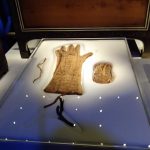
"The Beadle puts a livery gown on the candidate and says - I now clothe you in the Gown of the The Worshipful Company of Glovers of London". There are a few occasions in one's life which are truly memorable, that one will look back on and say that was really important.  One has happened for me in 2009 despite delays through car accidents and hospital stays and all sorts of impediments.  That was being admitted in early November to the Livery of the ancient London Guild of Glovers. The Glovers Company was founded in 1349 and despite a brief period between 1501 and 1639 when the power of capital over labour meant that it slipped into the hands of the Leathersellers has been independent since.

Historically Guilds throughout Europe got recognised somewhat as monopolies that controlled industries and slowed innovation.  They were certainly centres of knowledge and hopefully of excellence. Francesco di Marco Datini was a 14th century Merchant from Prato in Italy and the excellent Penguin "The Merchant of Prato" tells us how he worked with, for and against the guilds in Prato and in Florence. In the time of Queen Elizabeth 1st in England the control of the Spanish tannage (a mimosa process) was given to Leathersellers to ensure that every delivery that was sold came with proper technology transfer.

In the last ten years the Guilds in London have come strongly back to life and stopped being benevolently minded rich men's' clubs.  Of course tradition remains of importance but there is no reason that tradition cannot combine well with contemporary society. At the same time the older guilds have overcome the horror of the departure of so much of the manufacturing which sustained them for centuries to other parts of the world.  Assembly of components into products is only one part of an industry structure than brings products to the consumer and in our case puts gloves on their hands.

The Glove Industry is very much alive

At the same time gloves are returning to favour in the ways they used to be used a couple of centuries ago - industry where now health and safety issues are given greater attention, fashion where style and image is back in favour, and in sports where a mix of protection and dexterity can make the difference. And who anyway is to say that glove making will always stay in India and China. Increasingly the value of locally made gloves for quick retail response, access to superb materials, and exceptional designs and quality is being recognised again. Some return of manufacture is quite likely.

I am hoping that I will be able to contribute to this superb institution which blends the best of the past into our hopes for the future. I hope our links with the University of Northampton will continue and expand and that we can help to put gloves closer to the forefront of the minds of the consumer.

There is no doubt as we were told at an excellent Livery Luncheon in Drapers Hall that our perspective on the world is being refashioned in the light of the current economic crisis, hopefully a small, not so wealthy, but very active Livery Company can make a difference


27/10/09 - Brand Leather concepts from Beijing


Speech at Opening of the 30th IULTCS Congress in Beijing, China

Elton Hurlow has long had a good understanding of the issues in the leather industry. This is his speech at the opening of the IULTCS which has just started in Beijing:..............

Members of the IULTCS, Delegates, Honorary Guests, Ladies and Gentlemen,

Leather as a Component Brand

It is my distinct honour to address you at the opening of this week's grand celebration of the science and technology that surrounds the making of leather. Our industry takes a renewable natural raw material - which comes to us as another industry's waste by-product - and we turn it into a durable, aesthetically pleasing, and versatile structural material highly valued by leading brands of consumer articles. Our secret is that we have the privilege of working with one of natures most unique materials - collagen. Collagen comes to us in the form of twisted triple helical strands, which we then purify and build upon that framework. Our industry at once resolves a disposal problem and simultaneously creates a highly valued and useful product. We should actually use the word intermediate product as leather is typically a component of what the consumer buys. I suggest we describe leather as a component brand, as leather is the identifier of value. At retail, sales people always refer to their article as a leather jacket, a leather sofa, a leather shoe, or a car with leather interior. They add the word leather because it evokes a favourable emotional response in the mind of the consumer - it elicits feelings of aesthetic pleasure, it appeals to the visual, tactile & olfactory senses. The mind conjures expectations of performance and durability, and there is an overwhelming sense of intrinsic value. What a wonderful industry we work in, and this week we are here to celebrate the global knowledge surrounding collagen and its transformation into the component brand "leather".

Value Chain Issues

Over the last two years, I have reflected on my concerns surrounding two important aspects of the leather value chain. One is the Identity of leather and the second is the Image of the industry. Let me add that my concerns are NOT unique and are shared by other individuals and organizations involved in the leather industry.

1) Let's look first at the "Identity of Leather":
As scientists, we are uniquely qualified to answer the question: "What is leather?" I think we also need to reflect on the question: "What is NOT leather?" For what is leather, how it is labelled, and how it is understood at point of retail goes to the very heart of what it takes to maintain leather's fundamental value. You just have to walk into any department store today to understand that leather is under threat by "What is NOT leather". Substitutes add the word leather to elevate perceived value in the eye of the unwary consumer using terms "synthetic leather", "leather-like", "faux-leather", "composite leather" etc. These are not leather. Also, leathers of poor quality, those only made "good enough for purpose" or "to price point" also devalue the component brand by exhibiting poor performance and can result in a negative consumer experience.

So what can we do about it?

I suggest the first point is awareness. As technical individuals and as an organization we can offer support to those agencies such as ICT, Cotance, national bodies such as the CLIA that are working to differentiate leathers by implementing labelling and identification standards. Our institutes can also do research and publish work on re-cycling, sustainability, renewability and the other positive contributions of the leather industry. As scientists, we can clearly identify and should communicate the unique performance properties of leather. We must support high leather standards. We should celebrate those who excel and recognize their achievements. We should support those who work to raise the perceived value of leather and protect its unique and valued identity in the minds of end consumers.

2)Let's talk briefly now about the "Image of the Industry":
The image of the global tanning industry can be improved, especially with regard to pollution and environmental sustainability. It is not just from a moral and ethical viewpoint that we need to be good stewards of the environment, but a business case can also be made for sustainability in manufacturing. The technology exists to manufacture leather in a clean and environmentally sound way. Many companies do. But the actions of a few can override the good behaviour of many.

To improve our record will take concerted actions of individuals, organizations, and, because of the costs this involve, it will most likely take pressure from governments and regulators and we hope will include the support of brand conscious retail. Implementation of minimum standards and attainment of best practice guidelines takes time, money and effort. The IULTCS and its members can assist with continued research, technical support, knowledge transfer, and efforts aimed at benchmarking and recognition of those who do succeed in running clean operations. There are in fact many positive examples of this happening worldwide. The IULTCS needs to support these efforts.

A positive and cleaner image is also important to entice talented young people to study leather, and join our industry. We should also recognize those leather training organizations that have programs in place to educate young fashion designers and stylists about the wonderful story of genuine leather, its unique performance and aesthetic properties, and how to work with it.

Now, to the IDENTITY of Leather and the IMAGE of the Industry, I am going to add INNOVATION in leather making.

3)"Innovation in Leather making":
Innovation comes in different forms. It is not always the strong forces of "creative destruction" that can rapidly overturn the old ways and herald in the new. In my 25 years of leather industry experience, innovation has typically been incremental and adopted slowly. Machinery operates today on pretty much the same basic principles as two decades ago; but small design changes, introduction of electronics and computerized controls have resulted in great improvements. Chemical principles of making leather are essentially the same as years past; but the introduction of new products such as polymeric lubricants, stucco, new finishing technologies, have improved efficiency and performance. We have also seen improvements in waste treatment methods, tanning recipes, work practices, handling methods - these are all examples of continued creativity and innovation in the leather industry. The IULTCS this week will celebrate innovative solutions to problems, new ideas will come from lectures and personal interactions, and better understanding of our working materials and how to do things will evolve. Innovation drives efficiency, solves problems and opens new markets.

The IULTCS and its represented members are uniquely qualified to make major contributions in the area of Innovation, and this is the main reason we are here this week.

Beijing 0ctober 2009

Madam Zhang, Mr Su, Prof. Shi Bi and the rest of the organizing committee, we thank you for your hard work in preparation for this Olympics of leather technology. There is much significance surrounding this 30th IULTCS Global Congress. The first IULTCS Congress was held 60 years ago in Paris in 1949. During the 110-year history of our Union, this is only the second time that an IULTCS Congress will be held in Asia, and the first time in China. Today, China is a global leader in the production of leather, and her scientists and technicians make significant contributions toward the research and development of new technologies for leather manufacture. I ask that we focus this week on what I believe are three very important needs of our industry:

  • The Identity of Leather,
  • The Image of our Industry,
  • And Innovation in the leather making process

This is important to maintain value in our industry. Thank you.

Elton Hurlow
President - IULTCSOctober 2009